
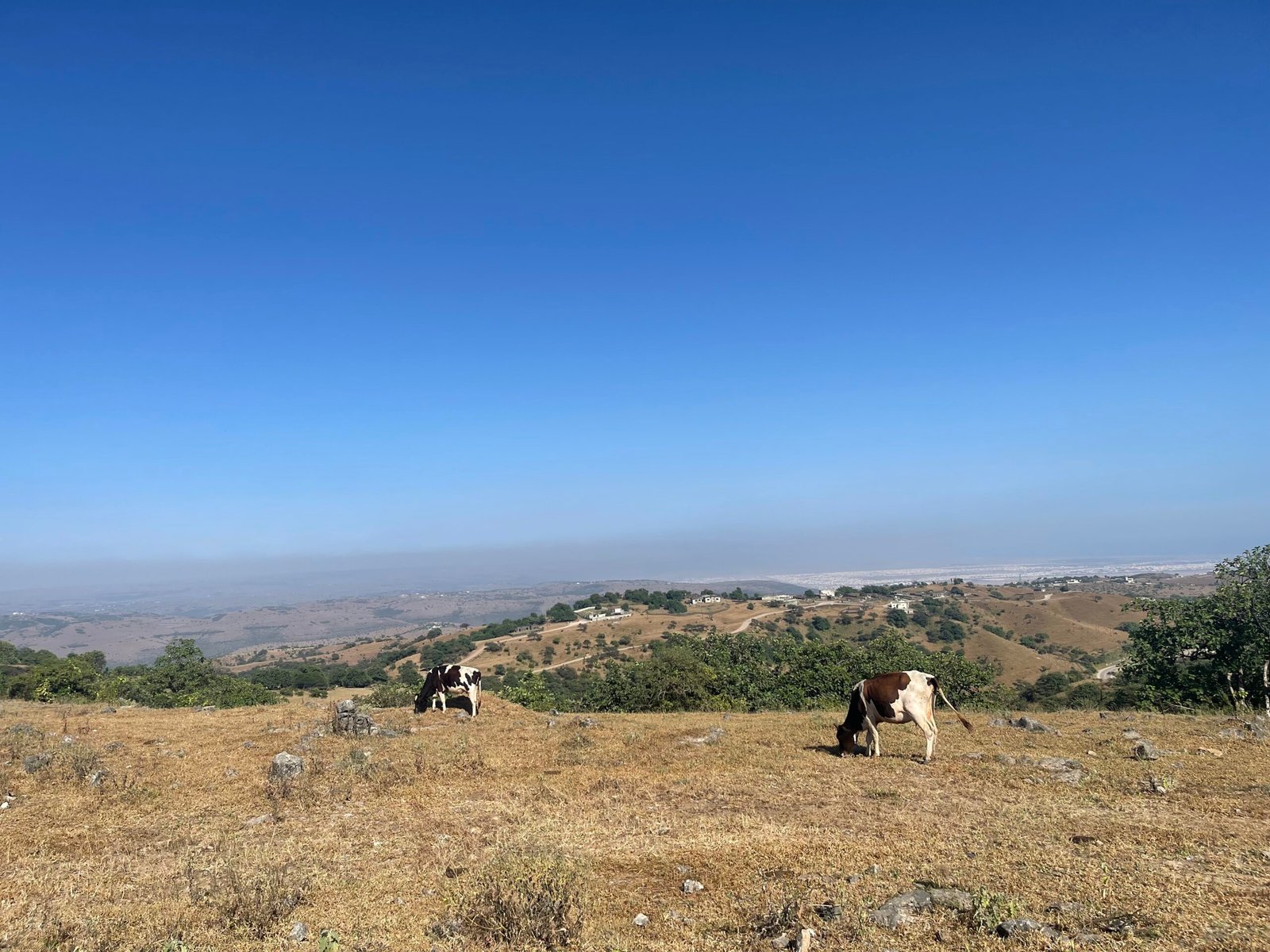
If you type “Salalah” into Google, almost everything you’ll find is about the khareef — the summer monsoon, the fog, the green mountains. That’s fair; it’s famous. In December or January, that advice may not apply to you. Most of what you’ve read doesn’t apply to you.
We run a small car rental company here in Salalah, and every winter we hand keys to a steady stream of visitors from the Czech Republic, Poland, Germany, Russia, France and beyond. The questions are always the same: Is it still green? Can I swim? Is it too hot? What is there to actually do? So this is our honest, no-brochure answer to what Salalah in winter is really like — written by people who drive these roads every day of the year.
Short version: winter is, in our opinion, the best time to be here. Here’s why.
Salalah weather in winter: warm, dry, and sunny almost every day
From October to February, Salalah is what Central Europe wishes it were. The monsoon clouds are long gone, the sky is clear, and it stays that way for months.
| Month | Daytime high | Night low | Sea temperature | Rain |
|---|---|---|---|---|
| October | ~31°C | ~23°C | ~28°C | Almost none |
| November | ~31°C | ~22°C | ~27°C | None |
| December | ~29°C | ~21°C | ~26°C | Almost none |
| January | ~27°C | ~19°C | ~25°C | Almost none |
| February | ~28°C | ~20°C | ~25°C | None |
A few things the table doesn’t tell you:
It’s not humid. Summer in the Gulf can feel like a sauna. Salalah in December feels more like a perfect day on the Mediterranean in June — warm sun, dry air, and a breeze off the Indian Ocean.
Evenings are pleasant, not cold. You’ll want a light layer if you’re up on Jabal Samhan after sunset or sitting by the sea late at night, but nobody here owns a winter coat.
October and November are slightly hotter than December and January. If you prefer it a touch cooler, January is the sweet spot. If you want maximum beach heat, come in late October or November.
It basically doesn’t rain. We get a handful of millimetres in the entire five-month stretch. Pack for sun, not for weather.
Is Salalah green in winter? An honest answer
This is the question we’re asked most, so let’s be direct.
The intense, misty green that you see in khareef photos is a summer thing. By October, the grass on the mountains has started turning gold, and by December the hills are back to their natural dry, rocky look with green mostly along the wadis and springs.
But “not khareef-green” doesn’t mean brown and lifeless. Here’s what’s still green in winter:
- Wadi Darbat keeps its lake and its trees all year. The waterfall doesn’t flow like it does in August, but the valley is still beautiful — and far quieter.
- Ayn Athum, Ayn Razat and the other springs still have flowing water and palm groves around them.
- The coconut and banana plantations along the Dahariz coast are green 365 days a year. It’s still the most un-Arabian scene in Arabia.
- The coast itself — Mughsail, Fazayah, Taqah, Mirbat — looks better in winter, because you can actually see it. During khareef, the sea is rough and the fog hides the cliffs. In winter it’s turquoise water, white sand, and full visibility.
So if you come expecting Ireland, you’ll be disappointed. If you come expecting a warm, dramatic coastline with mountains, desert and a few surprising green oases, you’ll be very happy.
We wrote a full guide to the summer season if you want to compare: Khareef Salalah 2026: Dates, Weather & What to Expect.
Can you swim in Salalah in winter?
Yes — and this is the biggest thing khareef visitors miss out on.
During the monsoon, the sea is dangerous and the beaches are closed to swimming. From October onwards, the Indian Ocean calms down completely. Water temperature stays around 25–28°C all winter, which is warmer than most European summer seas. The sand is white, the water is clear, and on a weekday morning you’ll often have a whole beach to yourself.
Our favourite winter beaches, from the city outwards:
- Al Haffa / Dahariz Beach — right in town, palm-lined, good for an evening walk and sunset.
- Mughsail Beach — 40 minutes west. A long white beach with cliffs behind it and the famous blowholes at Al Marneef Cave. Calm and swimmable in winter.
- Fazayah Beach — further west past the hairpin road. Hidden coves that look like nothing else in the Gulf. The last stretch is a steep graded track, so it’s a 4×4 job — more on that below.
- Taqah and Mirbat beaches — east of the city, quieter, and next to good fish restaurants.
One local tip: the sea is calmest in the morning. Do your beach time before lunch and your driving in the afternoon.
What to do in Salalah in winter
Winter is when the whole of Dhofar opens up. Nothing is closed for weather, the roads are dry, and the distances that feel exhausting in summer fog are easy on clear days.
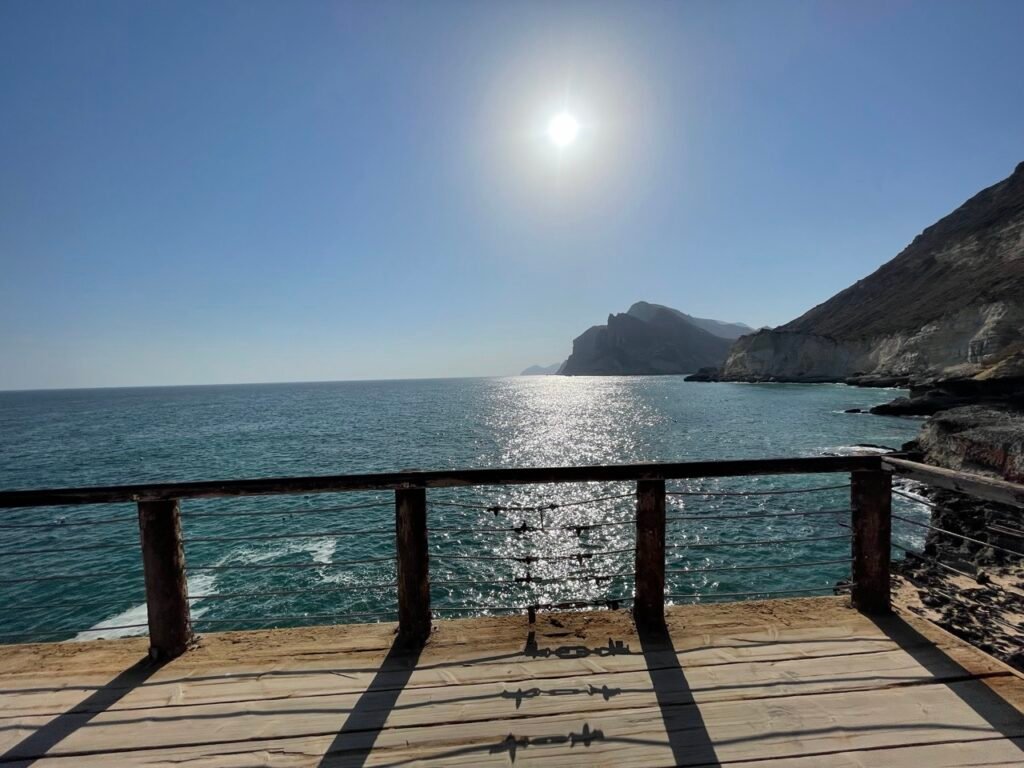
Mughsail and the blowholes (west). The classic first drive. Beach, cliffs, blowholes if the tide cooperates, then continue up the switchbacks toward the Yemeni plateau — one of the great drives of Arabia, and in winter you can actually see the view.
Wadi Darbat and Tawi Atair (east). Lake, camels wandering across the road, and a 200-metre-deep sinkhole up the hill. Two to three hours well spent.
Jabal Samhan viewpoint. A thousand-metre cliff edge above the coast. In winter the air is clear enough to see for dozens of kilometres. Sunset up here is the best photo you’ll take on your trip.
Sumhuram / Khor Rori. The UNESCO-listed ruins of an ancient frankincense port, above a lagoon full of flamingos and birds in winter.
Al Baleed and the Museum of the Frankincense Land. Another UNESCO site, right in the city, ideal for a slower morning.
The Empty Quarter. The world’s largest sand desert starts a couple of hours north. In summer it’s too hot to enjoy; in winter it’s perfect. Day trips are possible in a serious 4×4, or go with a guide if you’ve never driven dunes before.
Frankincense at Haffa Souq. Dhofar has produced the world’s finest frankincense for a few thousand years. Buy it here, not at the airport.
Whale and dolphin trips from Mirbat. Winter is the season for boat trips along the eastern coast — dolphins are very common, and humpback whales are occasionally spotted.
If you’d like all of this in a ready-made order with real driving times, our 3-day Salalah itinerary by car works perfectly in winter — just swap the waterfall stops for beach time.
Christmas and New Year in Salalah
December and January are the peak of the winter season, and it’s easy to see why: while Prague and Warsaw are at −5°C, you’re swimming.
A few practical notes for the holiday weeks:
- Oman is a Muslim country, so Christmas isn’t a public holiday, but the resorts at Hawana Salalah and along the coast put on Christmas and New Year’s Eve dinners and events for their guests. Outside the hotels, life runs as normal — which is actually great, because nothing closes.
- Book everything early. Flights, hotels and rental cars all fill up for the two weeks around New Year. We usually have no cars left for the holiday period by early December.
- The weather is at its most reliable. Clear skies, 27–29°C, cool evenings.
Do you need a car in Salalah in winter?
Honestly, yes — and we’d say this even if we weren’t a car rental company, because it’s the single thing that decides whether your holiday is “nice resort” or “unforgettable trip”.
Salalah’s attractions are spread over a huge area. Mughsail is 45 km west of the city. Wadi Darbat is 45 km east. Jabal Samhan is 80 km. Fazayah is over 100 km. There’s no public transport to any of them, taxis are expensive for these distances, and organised excursions run to a fixed timetable, stop for 20 minutes at each spot, and put you back on the bus with fifty other people.
With your own car you leave the hotel when you want, stay at a beach for three hours if you love it, stop wherever the view demands it, and eat where the locals eat. In winter the roads are dry and clear, Omani highways are excellent, and driving here is calm and easy — much easier than most European cities.
We wrote about this in more detail here: Why renting a car in Oman beats taxis or tours.
Which car for winter in Salalah?
- A sedan does 90% of it. The Toyota Corolla handles the whole coast road, Wadi Darbat, Jabal Samhan, Mughsail and all the UNESCO sites without any problem.
- Want Fazayah Beach and the tracks? The Nissan Rogue is our most popular SUV with foreign visitors and gives you more clearance and comfort.
- Planning the Empty Quarter or travelling as a family or group? The Nissan Armada or Toyota Fortuner are proper 4x4s with room for everyone and the luggage.
All our cars are automatic and come with 200 km per day, which is more than enough for a full day out. We meet you at Salalah Airport with the car for free, or deliver it to your hotel anywhere in Salalah.
Practical tips for a winter trip to Salalah
Driving licence. A valid EU (or most other national) driving licence is accepted for short-term rentals. Bring your passport and the licence card — that’s it.
Money. The Omani rial is strong (1 OMR is a bit over €2). Cards work in hotels and bigger shops; carry some cash for fuel stations, small restaurants and the souq. Fuel is cheap by European standards.
Dress. Beachwear is fine at the beach and at your resort. In town, at the souq and at the mosque, cover shoulders and knees — it’s a small courtesy that Omanis notice and appreciate.
Fridays. The weekend here is Friday–Saturday. Friday mornings are very quiet and some shops open late; it’s a good time for a long drive.
Camels on the road. Not a joke. Especially on the mountain roads and toward the west, slow down when you see them near the road. They don’t look both ways.
Staying longer? If you’re escaping the European winter for a month or more, daily rates stop making sense. We explain the numbers in Monthly car rental in Salalah: costs and when it beats daily rates, and we offer long-term leasing for stays of one to twelve months.
Salalah in winter: frequently asked questions
What is the weather like in Salalah in December? Warm and sunny. Daytime highs around 28–30°C, nights around 20°C, almost no rain, and the sea at about 26°C. It’s one of the most reliable months of the year.
Is Salalah green in winter? Not like the summer khareef. By December the mountains are back to their dry, golden-brown look. The wadis, springs and coconut plantations stay green year-round, and the coastline is at its most beautiful in winter because the fog and rough seas are gone.
Can you swim in the sea in Salalah in January? Yes. The water is around 25°C and calm. Swimming is safe at the main beaches from October through to April; it’s only during the monsoon (June–September) that the sea is rough and closed.
Is Salalah worth visiting in winter? If you want reliable sun, a warm sea, empty beaches, mountains, desert and history, and you don’t mind that the hills aren’t green, then winter is the best time to visit Salalah.
Do I need a 4×4 in Salalah in winter? Not for the main sights — a sedan reaches Mughsail, Wadi Darbat, Jabal Samhan and all the historic sites on paved roads. You want a 4×4 for Fazayah Beach, the Empty Quarter, and rougher tracks in the mountains.
Is it busy in Salalah in winter? December and January are the peak of the winter season, mainly with European visitors, but it never feels crowded the way khareef does. Away from the resorts you’ll often have entire beaches and viewpoints to yourself. October, November and February are quieter still.
Ready for a winter in the sun?
We’re a local, family-run company, and we’ll be here at the airport with your car — no queues, no hidden fees, no drama. Pick your car, message us on WhatsApp, and we’ll take care of the rest.
See our cars and winter prices · Contact us on WhatsApp
Book early for December and January — the cars go fast.
